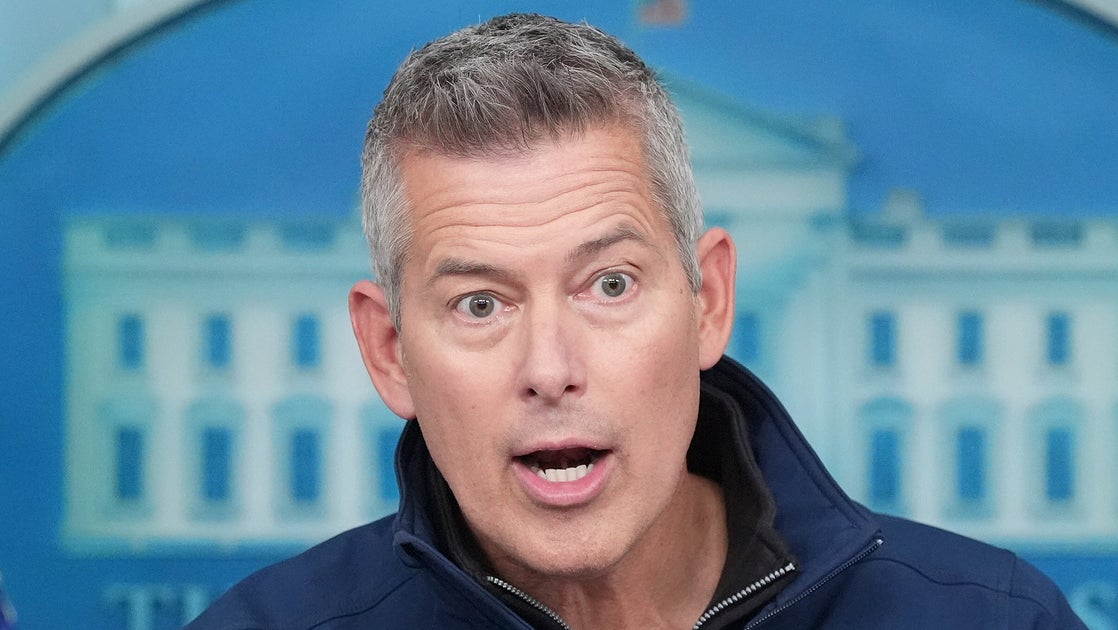
A nationwide ground stop that froze U.S. air travel for more than four hours on Friday has sparked a rare moment of bipartisan outrage, directed not just at the technical failure itself, but at Transportation Secretary Sean Duffy's immediate request for $50 billion in emergency funding.
According to Duffy, the Federal Aviation Administration (FAA) halted all aircraft departures across U.S. airports due to a communication issue affecting all Air Route Traffic Control Centers, a breakdown he later attributed to aging FAA routers. The disruption rippled across the country, leaving roughly 1.5 million travelers stranded or displaced after thousands of flights were delayed or canceled.
A $50 Billion Emergency Pitch
During a Friday night press conference confirming the ground stop had ended, Duffy framed the outage as an urgent funding crisis. Calling the situation an emergency, he urged Congress to approve $50 billion to overhaul the nation's aviation infrastructure, tying the pitch directly to President Donald Trump's reputation as a builder.
Duffy argued that Trump could rebuild the network and deliver results for the public, provided lawmakers supply the money. Rather than rallying support, however, the appeal drew sharp pushback from both Democratic and Republican lawmakers.
Criticism From Both Sides of the Aisle
Sen. Brian Schatz (D-Hawaii) pushed back against the idea of approving new taxpayer spending, pointing instead to existing federal allocations. Schatz suggested redirecting funds from an extra $60 billion pot designated for Immigration and Customs Enforcement (ICE) above its regularly appropriated budget, arguing that lawmakers could address the FAA's needs without adding new costs for taxpayers.
At the same time, former Trump ally Rep. Marjorie Taylor Greene (R-Ga.) attacked the press conference as an unacceptable demand for more public money. Pointing to existing federal tax revenues and a national debt exceeding $40 trillion, Greene characterized the request as a "shakedown" and argued that taxpayers were being put last.
Travelers and Observers React to the Disruption
Away from Capitol Hill, travelers caught in the middle of the shutdown expressed frustration over both the personal toll of canceled flights and the political messaging surrounding the outage. For many, the press conference felt disconnected from the immediate chaos at airports.
"My flight got cancelled because of this shutdown mess and Duffy’s out here doing PR for Trump instead of doing his actual job. People are stranded, missing work, missing funerals, and this clown is talking about Trump the builder. Read the room."
Others shared similar accounts of the disruption's human cost, noting that missed connections meant missing major family events. One commenter wrote, "My business partner missed his own brother’s funeral because of this crap. Get this guy out of here."
Skepticism also centered on the timing of the failure and the administration's management of aviation infrastructure. Several observers questioned how a system that had operated without a nationwide halt suddenly failed across all centers at once, while others debated whether past staffing cuts, aging hardware, or poorly timed maintenance played a role.
"I’d add, don’t get you all get me wrong, the ATC system is antiquated and does need modernization but the US government shouldn’t be swapping out anything related to the ATC system in a Friday, do it on a Monday midnight leading overnight into Tuesday and most importantly, don’t do it at the start of the holiday season rush."
While some acknowledged that the air traffic control network is overdue for modernization—with one observer noting, "I wouldn't mind working on a new system. Could be interesting. The old one is ancient beyond belief"—many remained distrustful of how a massive infusion of emergency money would be spent. Critics questioned why previous aviation funding bills had not prevented the failure and raised concerns about potential private-sector contracts.
What Comes Next for Aviation Funding
The Friday shutdown underscored the fragility of the country's air traffic control infrastructure, where a single communication failure can rapidly strand more than a million passengers. Yet the immediate political fallout suggests that turning that consensus into legislation will be difficult. With lawmakers divided over whether to authorize new spending or reallocate existing funds—and public patience worn thin by travel disruptions—Duffy's $50 billion proposal faces steep resistance before any overhaul can get off the ground.

